clamcleat.com uses cookies to ensure we give you the best experience on our website. By navigating our site, you agree to allow us to use cookies, in accordance with our Privacy Policy
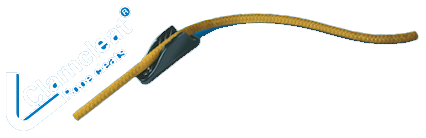
Cleats for 1-6mm Rope

Learn about the range of rope cleats for holding 1-6mm (3/64 - 1/4") ropes from Clamcleat® -available in nylon & Aluminium for industrial, marine and outdoor.
Open Cleats

The rope is put straight into the teeth of the cleat.
Fairlead Cleats
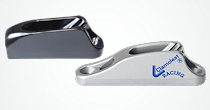
A fairlead guides the rope into the cleat.
Side Entry Cleats
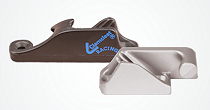
The Side Entry fairlead allows a rope to be hooked under the fairlead
Roller cleats

Rollers allow ropes to enter the cleat at large angles. They also reduce friction when guiding a rope into the cleat.
Power Grip
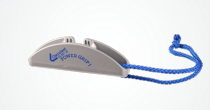
Power grip cleats allow you to pull at least twice as hard.
Auto Release
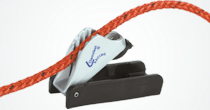
The cleat flips up to release the rope when a set load is exceeded
Cleats Rigged on 1-6mm Rope

These cleats are all rigged on a rope, in mid air. They are not fixed to a surface.
Insert Cleats
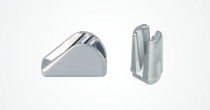
Insert cleats are designed to snap fit into a plastic moulding to combine the strength of an aluminium cleat with the lower cost of a moulded component.
CK Cleat Range
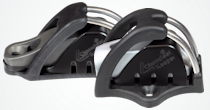
Performance cleating for control lines. Supplied complete with Keepers and Cages.
Q: What Clamcleat® products are suitable for 1-6mm ropes?
Ans: There is a range of products made by Clamcleat® which are suitable for 1-6mm ropes including open, Fairlead, side entry, roller, auto release, Aero and power grip cleats.
Q: What is an open cleat?
Ans: An open cleat allows you to completely remove the rope from the cleat.
Q: What is a fairlead cleat?
Ans: A fairlead guides the rope through the cleat making it easier to adjust the position of the rope. The rope will need to be threaded through the cleat during installation.
Q: What is a side entry cleat?
Ans: A side entry cleat allows the rope to be removed from the cleat from the side and placed back into the teeth easier. Ideal for use with spinnaker guy sheets where the leeward cleat is not required.
Q: What is a roller cleat?
Ans: A roller cleat has an internal sheave within the cleat which allows the rope to enter the cleat from more obtuse angles from above or below the cleat.
Q: What is an auto release cleat?
Ans: The auto release cleat allows the cleat to release the load once it reaches a set load ideal for rudder downhauls.
Q: What is an Aero cleat?
Ans: The Aero cleat allows the cleat to be positioned and adjusted along the rope easily and will accept a variety of cleats.
Q: What is a power grip?
Ans: The power grip allows you to tension the rope easier without hurting your hands. Slide the cleat over the rope and pull available in a one hand or two-handed version
Q: Why does Clamcleat® not publish safe working loads (SWL) or break loads for its cleats?
Ans: The quality, type and style of the rope or cord plays a major role in the performance of the cleat. Normally the better the quality of the rope the greater holding power, also some cleats are designed to slip once they exceed the desired holding load as a safety feature including securing fabrics such as sunshades or covers.
Q: Do you get a better performance with an Aluminum cleat?
Ans: Aluminum cleats do not improve the performance of the cleat, but they can achieve higher holding loads and they also mighty improve the lifespan of the cleat especially if the rope will be in contact with the teeth whilst the rope is being pulled through during adjustment.
Q: What different coating are there for the Aluminum cleats?
Ans: The standard coating for the cleat is a Stoving Aluminum silver enamel coating. For extra protection from corrosion and a high-tech appearance the cleats are also available in a dark grey Hard anodized finish. The part no in suffixed with “AN” to identify the hard anodized finish.
Q: What is the best way to fix an aluminum cleat into a carbon fiber spar?
Ans: You need to create a barrier between the aluminum cleat and the carbon fiber surface to stop electrolytic de-composition. The barrier can be created by cutting a thin shim of plastic to the shape of the cleat and drill the fixing holes (the retail card the cleat is sold on is ideal to use as the shim), also use aa inhibitor or anti corrosive jointing compound such as Duralac on the fixing.
Q: Do you need to put a barrier between the Aluminum cleat and the stainless-steel fixing?
Ans: You need to add a inhibitor or barrier compound between the fixings, the Aluminum cleat and the mast or boom. For example, Daralac anti corrosive jointing compound.
Q: How long should a Nylon cleat last?
Ans: This really depends on the usage, the quality and age of the rope used etc. so is very difficult to gauge. The ultraviolet rays will discolor the cleats over time and in very sunny climates may affect the life of the cleat. In extreme climates the life expectancy should be 10 -15 years depending on usage and in more moderate climate 20 + years.
Q: How long should an Aluminum cleat last?
Ans: This really depends on the usage, the quality and age of the rope used etc. so is very difficult to gauge. The ultraviolet rays will discolor the cleats over time and in very sunny climates may affect the life of the cleat. In extreme climates the life expectancy should be 10 -15 years depending on usage and in more moderate climate 20 + years.
Q: Can I fit my cleats using pop rivets?
Ans: Using pop rivets to fit your cleat is a tidy quick way of securing the cleat. Ensure the pop rivet is at 90 degrees to the cleat when fixing and with certain smaller cleats the head of the pop rivet gun will not sit onto the pop rivet when in place so you will require to add a spacer between the gun and the rivet.
Q: What type of rope or cord will give the best performance on my cleats?
Ans: In our experience a braided good quality rope gives you the best holding performance.
Q: Is there any maintenance required to my cleats to keep them performing well?
Ans: We would recommend flushing the with fresh water as often are you can.
Shop By
Shopping Options
