clamcleat.com uses cookies to ensure we give you the best experience on our website. By navigating our site, you agree to allow us to use cookies, in accordance with our Privacy Policy

CL268 Racing Micros
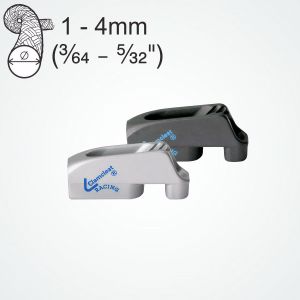
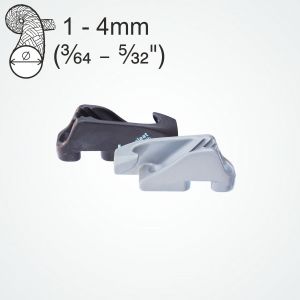
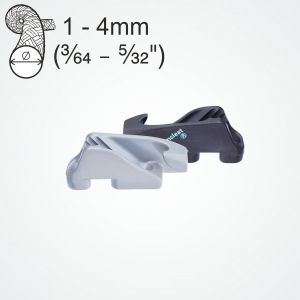
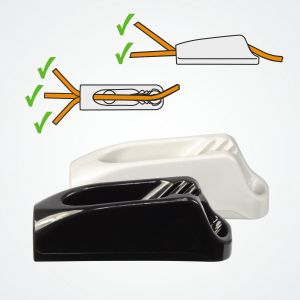
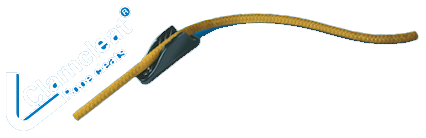
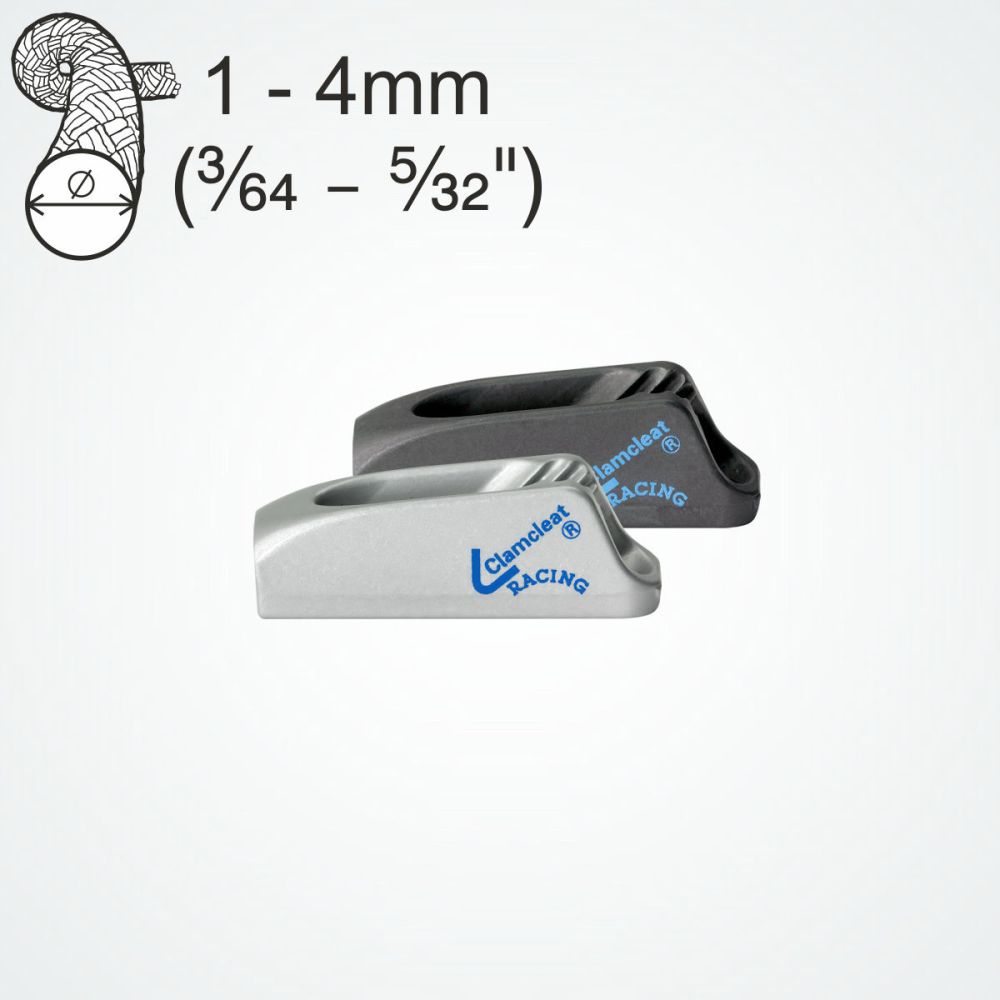
A small neat, strong, alloy cleat with fairlead.
| Technical Details | Metric | Imperial | |
|---|---|---|---|
| Rope Diameter |  |
1 - 4mm | 3/64 - 5/32" |
| Material |  |
Aluminium | Aluminium |
| Hole Centres |  |
24mm | 15/16" |
| Length |  |
44mm | 1 3/4" |
| Width |  |
13mm | 1/2" |
| Height |  |
16mm | 5/8 |
| Bolt Size |  |
M3 | #4-40. 1/8" |
| Screw Size |  |
3 | No. 4 |
| Weight |  |
13gms | 0.5oz |
Availability:
In stock
SKU
Clamcleat-CL268
A small neat, lightweight, strong, alloy cleat with a fairlead. Advanced tooth technology to hold all types of small rope. Applications include Canoes (seat & rudder lines); Dinghy control lines; Kitesurfing (5th line adjustment).
Manufactured from aluminium for light weight and durable performance the CL268 is available in two finishes:
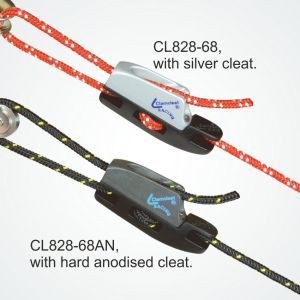
1. CL268 has a silver stove enamel finish for a cost effective, high quality coating. Suitable for all inland and most coastal kiting.
2. CL268AN has a hard anodised finish to give the ultimate hard wearing surface. Excellent for extreme coastal conditions.
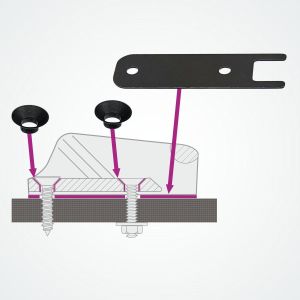
To prevent any corrosion when fitting the CL268 to carbon fibre tubes, use a barrier compound, or our PT425 + PT425 insulators.
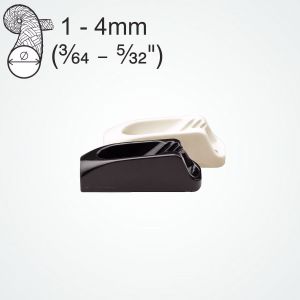
For lighter loads, consider the nylon version - CL263.
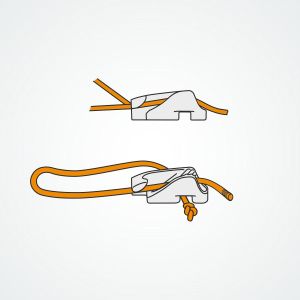
The CL270 is a version with a becket for holding the end of a rope (or rigging with a 4:1 ratio).
If you want a side-entry fairlead, look at the CL277 (open on right side) and CL278 (open on left side).
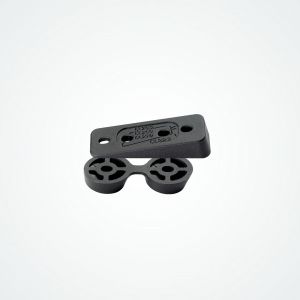
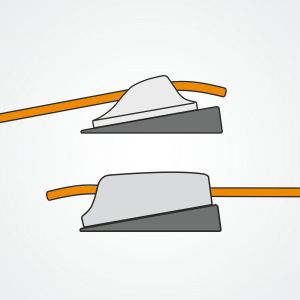
Using a CL823 Tapered Pad to angle the cleat can aid rope alignment.
CL828-68 is a CL268 that can be rigged on a rope.
A larger version of the CL268 is the CL211 Mk2.
Write Your Own Review

Q: What size of rope should I use on my CL268 cleat?
Ans: The size of rope used on the CL268 is from 1 to 4mm (3/64 – 5/32”).
Q: Is CL268 available in plastic?
Ans: The plastic version of the CL268 is the CL263.
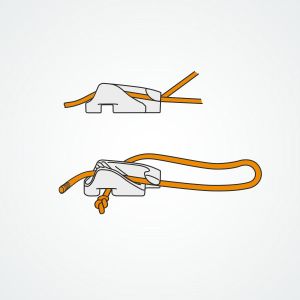
Q: What is a fairlead cleat?
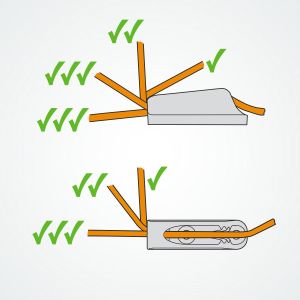
Ans: A fairlead guides the rope through the cleat making it easier to adjust the position of the rope. The rope will need to be threaded through the cleat during installation.
Q: What fixing do I need to secure the Clamcleat® CL268 Cleat?
Ans: The fixing for a CL268 cleat is M3 CSK or 3mm no 4 woodscrews.
Q: What are the hole centers for securing the Clamcleat® CL268 Cleat?
Ans: The hole centers for the CL268 cleat are 24mm 15/16”.
Q: Is there a tapered pad for the Clamcleat® CL268 cleat?
Ans: The tapered pad for the CL268 is CL823.
Q: Is there a becket version of the Clamcleat® CL268 cleat to turn it into a 2:1 system?
Ans: The becket version of the CL268 is CL270.
Q: Why does Clamcleat® not publish safe working loads (SWL) or break loads for its cleats?
Ans: The quality, type and style of the rope or cord plays a major role in the performance of the cleat. Normally the better the quality of the rope the greater holding power, also some cleats are designed to slip once they exceed the desired holding load as a safety feature including securing fabrics such as sunshades or covers.
Q: Do you get a better performance with an Aluminum cleat?
Ans: Aluminum cleats do not improve the performance of the cleat, but they can achieve higher holding loads and they also might improve the lifespan of the cleat especially if the rope will be in contact with the teeth whilst the rope is being pulled through during adjustment.
Q: What different coating are there for the Aluminum cleats?
Ans: The standard coating for the cleat is a Stoving Aluminum silver enamel coating. For extra protection from corrosion and a high-tech appearance the cleats are also available in a dark grey Hard anodized finish. The part no in suffixed with “AN” to identify the hard anodized finish.
Q: What is the best way to fix an aluminum cleat into a carbon fiber spar?
Ans: You need to create a barrier between the aluminum cleat and the carbon fiber surface to stop electrolytic de-composition. The barrier can be created by cutting a thin shim of plastic to the shape of the cleat and drill the fixing holes (the retail card the cleat is sold on is ideal to use as the shim), also use aa inhibitor or anti corrosive jointing compound such as Duralac on the fixing.
Q: Do you need to put a barrier between the Aluminum cleat and the stainless-steel fixing?
Ans: You need to add a inhibitor or barrier compound between the fixings, the Aluminum cleat and the mast or boom. For example, Daralac anti corrosive jointing compound.
Q: How long should an Aluminum cleat last?
Ans: This really depends on the usage, the quality and age of the rope used etc. so is very difficult to gauge. The ultraviolet rays will discolor the cleats over time and in very sunny climates may affect the life of the cleat. In extreme climates the life expectancy should be 10 -15 years depending on usage and in more moderate climate 20 + years.
Q: Can I fit my cleats using pop rivets?
Ans: Using pop rivets to fit your cleat is a tidy quick way of securing the cleat. Ensure the pop rivet is at 90 degrees to the cleat when fixing and with certain smaller cleats the head of the pop rivet gun will not sit onto the pop rivet when in place so you will require to add a spacer between the gun and the rivet.
Q: What type of rope or cord will give the best performance on my cleats?
Ans: In our experience a braided good quality rope gives you the best holding performance.
Q: Is there any maintenance required to a cleat to keep it performing well?
Ans: We would recommend flushing the with fresh water as often are you can.
Related Products