clamcleat.com uses cookies to ensure we give you the best experience on our website. By navigating our site, you agree to allow us to use cookies, in accordance with our Privacy Policy
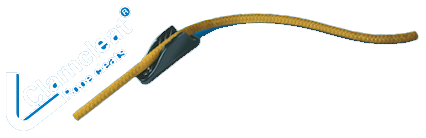

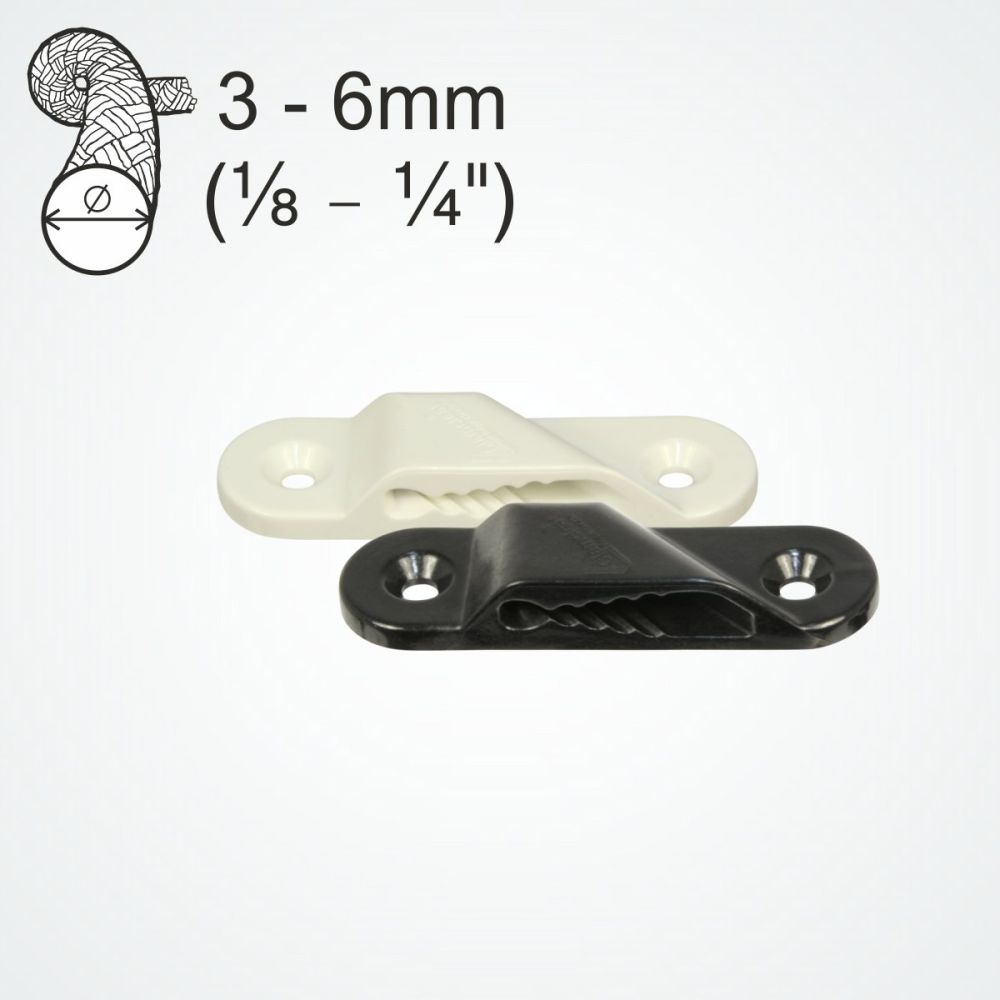

CL283 Sail Line (Starboard)
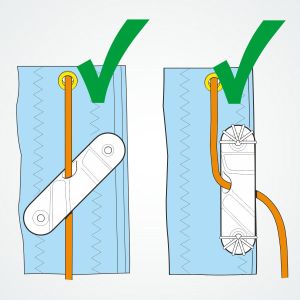
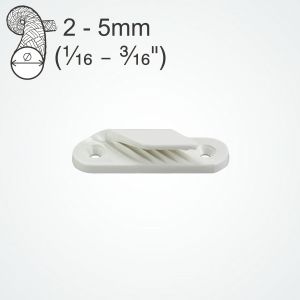
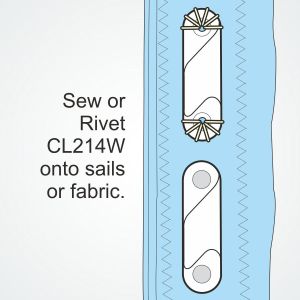
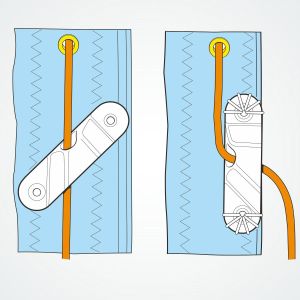
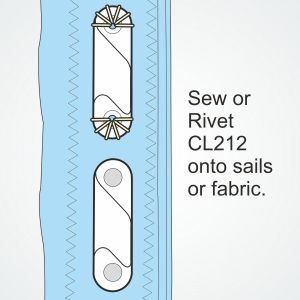
Nylon sail cleat with integrated fairlead. Sew or rivet to sail.
| Technical Details | Metric | Imperial | |
|---|---|---|---|
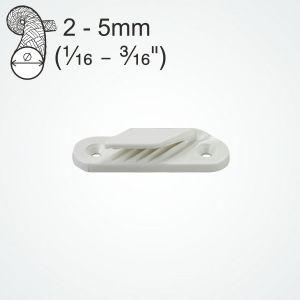
| Rope Diameter |  |
2-5mm | 1/16 - 3/16" |
| Material |  |
Nylon | Nylon |
| Hole Centres |  |
49mm | 1 15/16" |
| Length |  |
70mm | 2 3/4" |
| Width |  |
21mm | 13/16" |
| Height |  |
12mm | 15/32 |
| Bolt Size |  |
M4 | #8-32. 5/32" |
| Screw Size |  |
M4 | 5/32 |
| Weight |  |
9gms | 0.3oz |
Availability:
In stock
SKU
CL283
The tooth design of the CL283 Sail Line Cleat (Starboard) allows a quick, positive lock that is easy to release. Add to this its low profile makes it ideal for tensioning sail leech lines. The integrated rope guide also make it suitable for adjusting & securing reefing points.
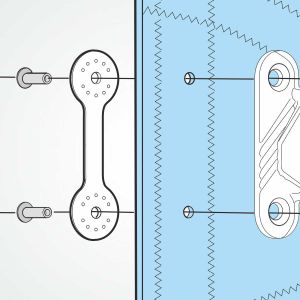
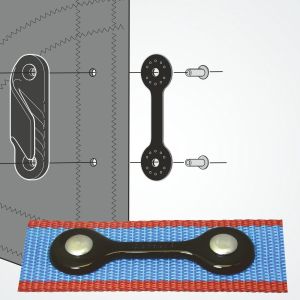
The CL283 is also used as a low profile deck cleat. Manufactured from marine grade nylon for light weight and durable performance it can be mounted in two positions. Use a backplate when riveting a cleat onto sails or technical fabrics as it will prevent the rivet pulling through.
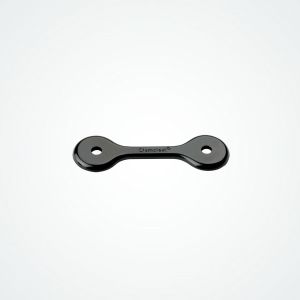
The CL283 is black. It is ideal for fixing to black sailcloth. Remember to sew cleats onto carbon fibre sails. Use the CL212BP-B black backplate to spread the load on the sail. Most deck cleats are black.
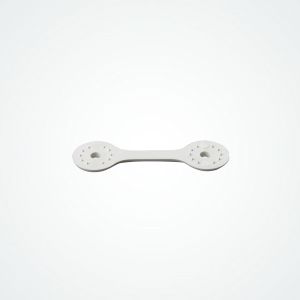
The CL283W is white. Use on white or light coloured sails, together with the white CL212BP backplate.
The Port version of this cleat isthe nylon CL281.
CL273 is the alloy version of this cleat.
For sail cleats without a rope guide, see CL212 and CL214W, both for 2-5mm lines.
Write Your Own Review

Q: What size of rope should I use on my CL283 cleat?
Ans: The size of rope used on the CL283 is from 2 to 5mm 1/16 – 3/16”.
Q: What does port and starboard mean when talking about cleats?
Ans: Port is the left-hand side and starboard is the right-hand side. So, if used on a sail the port cleat will go on the left-hand surface of the sail and the starboard on the right-hand surface.
Q: What accessories can be used with the CL283?
Ans: There are backplates and rivets available if you are attaching the cleat to a sail.
Q: Can the Clamcleat® CL283 cleat be sewn or riveted onto the sail?
Ans: The Clamcleat® CL283 cleat can be sewn or riveted onto the sail and a backing plate and rivets are available, see details on this page.
Q: What colours are the Clamcleat® CL283 available in?
Ans: The Clamcleat® CL283 are available in black (CL283) or white (CL283W).
Q: Is the Clamcleat® CL283 available in aluminum?
Ans: The Clamcleat® CL283 is available in aluminum and the part number is CL273 or CL273AN (hard coat finish).
Q: Is the Clamcleat® CL283 available for the port side?
Ans: The Clamcleat® CL283 is available on the port side and the part number is CL281.
Q: Why does Clamcleat® not publish safe working loads (SWL) or break loads for its cleats?
Ans: The quality, type and style of the rope or cord plays a major role in the performance of the cleat. Normally the better the quality of the rope the greater holding power, also some cleats are designed to slip once they exceed the desired holding load as a safety feature including securing fabrics such as sunshades or covers.
Q: Do you get a better performance with an Aluminum cleat?
Ans: Aluminum cleats do not improve the performance of the cleat, but they can achieve higher holding loads and they also might improve the lifespan of the cleat especially if the rope will be in contact with the teeth whilst the rope is being pulled through during adjustment.
Q: How long should a Nylon cleat last?
Ans: This really depends on the usage, the quality and age of the rope used etc. so is very difficult to gauge. The ultraviolet rays will discolor the cleats over time and in very sunny climates may affect the life of the cleat. In extreme climates the life expectancy should be 10 -15 years depending on usage and in more moderate climate 20 + years.
Q: What type of rope or cord will give the best performance on my cleats?
Ans: In our experience a braided good quality rope gives you the best holding performance.
Q: Is there any maintenance required to a cleat to keep it performing well?
Ans: We would recommend flushing the with fresh water as often are you can.
Related Products